From advanced digital tools to ground-breaking on-site technology, Winvic continues to redefine what’s possible in construction – making it safer, smarter, and more sustainable. Whether in crane cabins or through robot printers, the team consistently delivers complex, innovation-led projects.
In this blog, we meet Senior Operations Manager, Dave Elson, who reflects on his 33-year career, his passion for innovation, and the importance of developing the next generation of construction professionals. He also shares how these values came to life at Crown Place Birmingham – the city’s tallest student accommodation building.
Tell us about your journey into construction and your role in innovation at Winvic.
I started in construction when I was 17 as a trainee engineer with a major contractor. They sponsored me through a BTEC in Building and Civil Engineering, and later a unique Construction Engineering Management course at Loughborough University, created by 10 major contractors. Only 10 students were chosen that intake, so it was a real honour.
From there, I progressed through engineering, construction management, project management and eventually contract management. I later joined a groundwork firm, launching a multi-room residential business where I managed everything from land buying to sales. That chapter closed during the 2008 financial crash, after which I worked on Private Finance Initiative projects worth around £190 million, including schools and prisons.
I joined Winvic in 2018 as an Operations Manager, later moving into my current position as Senior Operations Manager. My background in complex multi-room projects and large-scale infrastructure gave me the platform to do things differently – and at Winvic, I’ve been encouraged to do exactly that.

What does innovation mean to you, and why is it important in construction?
For me, innovation is about keeping construction relevant and exciting – especially for the next generation. We’re in an industry that’s often seen as old-fashioned. If we don’t modernise, we risk losing young talent to sectors that feel more dynamic and tech driven.
When I started out, I loved the process of building things – and I still do. Innovation allows us to preserve that passion while making construction smarter, safer, and more efficient. It’s not just about gadgets – it’s about rethinking how we work and giving teams the freedom to try new things.
Winvic gives us that freedom. We’re empowered to think outside the box, and the culture here means you can speak to anyone you need to – quickly, openly, and constructively, and that culture enables innovation to thrive.
Crown Place Birmingham has been called a showcase for innovation – what sets it apart?
Crown Place is a 33-storey tower, and Birmingham’s tallest student accommodation building. We saw it as the perfect opportunity to challenge traditional construction methods.
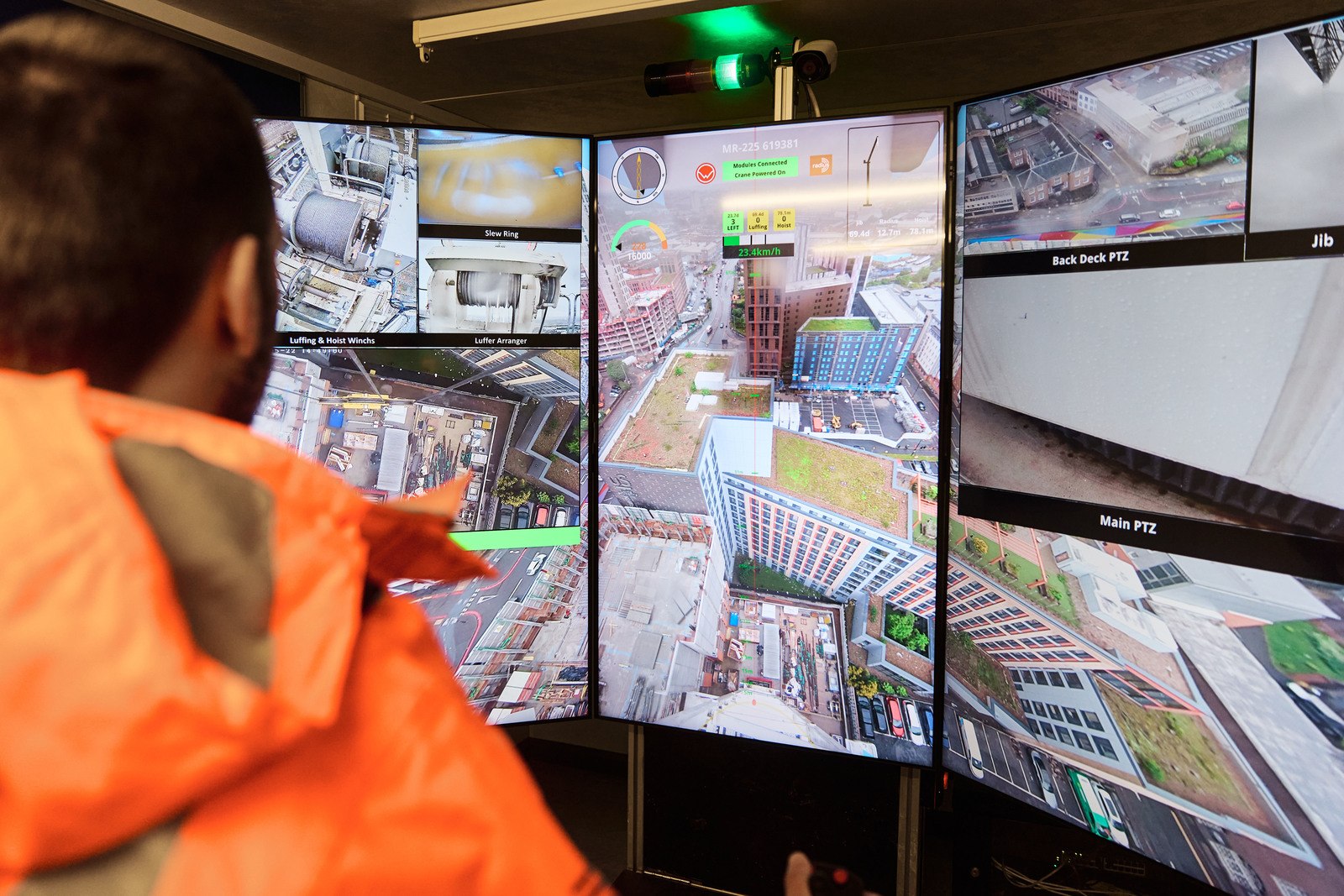
One of the biggest breakthroughs has been using Skyline Cockpit – a pioneering system that allows tower cranes to be operated from the ground via remote control. While many contractors were hesitant, we recognised its potential. With support from our Group HSEQ Director, Ian Goodhead, and trials with our tower crane partner, we became the first live construction site in the world to implement it.
We also introduced robotic printing, which is a technology that prints digital drawings directly onto site surfaces. Our Engineering Manager, Vid, championed it, and although there were technical challenges at the start, once resolved the system proved to be fast, precise, and an excellent training tool.
Another major success was the use of the KONE Jump Lift – a permanent lift system installed during construction. This method, used on only a handful of projects in the UK includingincluding The Shard, transformed site logistics by making the movement of people and materials far more efficient.

How have these innovations impacted the project?
The benefits have been significant – improving safety, efficiency, sustainability, and collaboration. Operating cranes from the ground eliminated risks associated with working at height, and the KONE Jump Lift improved site logistics. Robotic printers streamlined workflows, improved accuracy, and reduced material waste.
Beyond the technology itself, involving younger professionals in the rollout of these systems brought the team closer together. These successes were not just about adopting new tools, but about the people behind them and the culture of innovation that Winvic encourages.
You’ve been mentoring a number of young professionals on this project. What has that been like?
It’s been one of the most rewarding aspects of the project. We’ve had T-Level students, apprentices, and graduates involved, and their enthusiasm has been instrumental in making these innovations work. Some of our youngest team members are now among the most skilled robotic printing operators in the country.
For me, mentoring is about more than teaching technical skills. It’s about explaining why we do things in a certain way and giving people the space to grow. I was lucky to have strong mentors early in my career, and I want to pay that forward.

What inspires you to keep pushing boundaries?
The culture at Winvic and the people I work with are what keep me motivated. Leadership support, combined with the energy of the next generation, creates the perfect environment for ideas to thrive. Seeing an idea progress from concept to reality – and knowing it improves the way we build – is incredibly rewarding.
I always say, if you don’t try, you won’t see the benefits. At Winvic, we try – and we succeed together. For us, innovation and talent development go hand in hand.
 Share
Share
 Repost
 LinkedIn
 Email
Email