
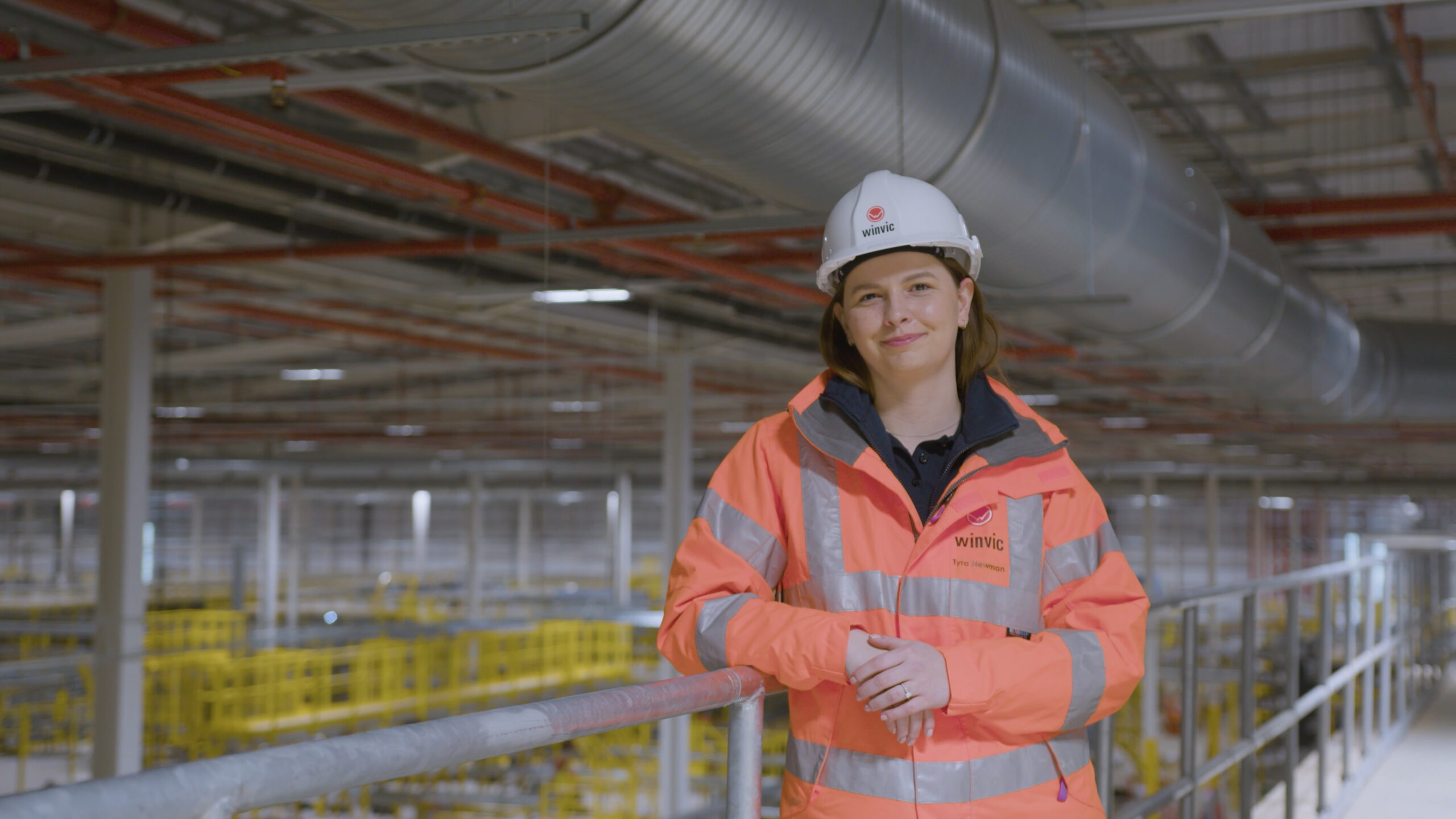
BLOG: Following Curiosity Into a Green Career: Tyra Newman
How do you prepare for a career that hasn’t yet taken shape? For Tyra Newman, following an interest in human geography and a desire to make a positive difference led her towards a sustainability role that hadn’t yet been developed when she was studying.
Today, as Sustainability Manager at Winvic, she brings together carbon data, green supply chain engagement and strategy to help the business understand its environmental impact and identify opportunities for improvement. Her work connects technical expertise with collaboration and people management, showing how different interests and skills can come together in a green career.
For Green Careers Week, Tyra shares how she found her way into sustainability, what the work looks like day to day and why you don’t need your whole career mapped out to get started. Her advice? Follow your interests, stay curious and keep an open mind about where they could take you.
Tyra, what inspired you to pursue a career in sustainability?
When I was studying, I was following my interests rather than a clearly defined career path. The role I now hold at Winvic hadn’t yet been established; sustainability was still an emerging specialism within construction, and the industry had not yet reached the level of maturity we see today.
During my studies, I became interested in how we can turn knowledge into practical change. I explored sustainable cities and how technology and infrastructure can reduce environmental impact of buildings in-use, while my postgraduate dissertation examined how people’s understanding of the environment influences the way they interact with and protect it. These experiences helped me connect the places we build with the people who use them and recognise the importance of technical solutions, education and engagement.
That connection is central to my work today: helping people across Winvic and our supply chain understand their environmental impact and use that knowledge to drive positive change. As sustainability has become more established within the industry, there are now many more opportunities to build a career around those interests. My own journey is a reminder that you don’t need to know your future job title from the outset; staying curious and following what interests you can open doors you hadn’t yet considered.
How did you get into your current role at Winvic?
After completing my studies, I began my career in luxury fashion retail. Although it was a different industry, the experience gave me a grounding in working with people, communicating clearly and understanding different needs; transferable skills that are just as relevant to engaging colleagues and supply chain partners in sustainability within construction. I wanted to combine that experience with my academic interests and find a role where I could help drive positive environmental change.
My passion for geography led me to study Human Geography at Kingston University, where my experiences inspired me to then explore the subject further through an MSc in Sustainability and Management at Royal Holloway.
Almost five years ago, when I was exploring my career options, sustainability roles were difficult to come by. Winvic’s decision to establish a dedicated sustainability department caught my attention because it demonstrated a commitment from the business and offered an opportunity to put my interests and passion into practice within the construction industry. I joined the team in 2022 to support the development of the green supply chain and pursue the career path I wanted. Since then, I have gained experience across embodied carbon, whole life carbon assessment reporting and operational carbon, including Scope 1, 2 and 3 emissions. This has given me a holistic understanding of sustainability and how these areas connect, helping me support supply chain engagement.
I’ve also seen how valuable it is to bring skills and experience from one industry into another. Through Winvic’s collaborative work with edie, I’ve connected with sustainability professionals across different sectors who face many of the same challenges. Sharing our experiences and approaches reinforces how much we can learn from one another, and why a background in a different industry can be an asset to a career in sustainability.
Can you tell us more about your role and responsibilities?
What excites me about my role is how connected everything is. My main focus is our green supply chain, but I also oversee elements of Winvic’s operational carbon footprint, including Scope 1 and Scope 2 emissions, and the development of our approach to Scope 3 data. These aren’t separate workstreams: as a main contractor, we sit at the intersection of clients, designers, subcontractors, suppliers and our own teams. I love being able to connect those perspectives and help everyone understand the part they can play in driving decarbonisation.

A big part of that is turning carbon data into something people can act on. I work with our operational carbon team to improve how we collect, manage and report, refine our methodologies and identify opportunities to keep improving. For me, the value goes beyond the reporting itself; it’s about using that understanding to bring people into the conversation, inform decisions, demonstrate measurable progress and turn our ambitions into practical action.
That people side matters just as much to me. I manage and support the team, helping colleagues build their skills and progress in their careers, and contribute to bringing Winvic’s Sustainability and ESG Strategy to life through a more interactive digital format on our website. This reflects our priorities, materiality and roadmap, while helping everyone see how they can contribute every day through our Pillar working groups. I help put this into practice as Winvic’s Innovation Pillar Lead, working with the group to develop innovative products and materials that help to deliver low-carbon, high-value assets for our clients.
What does a typical working day look like?
There really isn’t a typical day — and that’s what keeps it exciting! Every year I’ve been at Winvic, our commitments and approach to decarbonising the built environment have evolved alongside the industry’s growing sustainability maturity. That evolution runs right through my day-to-day work: there’s always a new challenge to explore, something to learn or an opportunity to improve how we do things.
My day might take me from developing strategy and researching emerging requirements to delivering training, reviewing reports or helping our supply chain or colleagues. I also work closely with our marketing team to communicate our messages clearly and accurately. With so many connected priorities, good time management and knowing where to focus my attention are essential, alongside being flexible when something new needs our input.
I also lead much of the written sustainability input into tenders and bids, bringing Winvic’s capabilities and approach to life for potential clients, and support our work on accreditations, including EcoVadis and ISO14064-1. These activities draw on knowledge from across the business, so connecting teams and sharing information are a big part of making it all happen.
Just as importantly, I make time for my own learning and development. In such a fast-moving field, keeping yourself informed isn’t an optional extra, it’s part of being able to support others. Taking time to understand changing sustainability requirements and explore new approaches helps me give the wider business informed, practical guidance and equips us to respond as expectations evolve.
What do you enjoy most about your job?
What I enjoy most is being able to turn curiosity into action. Sustainability never stands still, and I love exploring a challenge, learning something new and then finding ways to put that knowledge to work. As standards, government requirements and business expectations evolve, we have opportunities to rethink our approach and help drive decarbonisation across the built environment.
One of the most rewarding parts of my role is seeing our Green Supply Chain partnerships help drive down Scope 3 emissions. Becoming a net zero business by 2040 is a collective ambition, and working alongside our GSC partners is central to that journey. We work with them to align reporting with our Scope 1, 2 and 3 boundaries, helping us accurately assess their contribution to our own Scope 3 emissions inventory. For me, it’s about turning that understanding into action and building awareness of why decarbonisation matters throughout the value chain. A key part of this engagement is lead through bi-annual Workshops. In March 2026, we delivered our fourteenth GSC workshop, providing a platform for open dialogue and collective problem solving and exploring ways we can work together towards transitioning to a Net Zero future. We have a further four workshops planned for this November to continue conversations on decarbonisation, sustainability and social value.
I enjoy working with professionals across the industry and collaborating through organisations and initiatives such as the UKGBC and UK Net Zero Carbon Buildings Standard (UK NZCBS) to advance net zero and decarbonisation. Collaboration is essential: sharing knowledge, experiences and challenges helps us learn from one another and develop practical solutions. It’s equally important to keep educating ourselves within our roles, looking beyond our day-to-day responsibilities to understand the wider industry. This helps us anticipate change, stay ahead of the curve and put new insights into practice.
That collaboration also extends beyond Winvic, through our active role in shaping sustainable construction and ESG policy nationally, recently delivering an industry Whitepaper in partnership with the PLG on ESG: From Commitment to Compliance: Why the UK Net Zero Carbon Buildings Standard Needs Regulatory Backing. In October I organised an industry roundtable, hosted by Winvic as a UKNZCBS Pathfinder for industrial and logistics. This session focused specifically on the commercial, technical, and operational realities of applying the Standard to speculative storage and distribution builds.

As part of Winvic’s UKGBC membership, I was proud to participate in the Supply Chain Decarbonisation Task Group and contribute to the development of Engaging the Supply Chain: A Practical Guide to Delivering Sustainability Outcomes, with Winvic acting as a Project Partner. Most recently I attended the ASBP – Alliance for Sustainable Building Products, Building Resilience through Reuse, taking part in a panel discussion led by the UKGBC. This echoed many of the same key messages raised from the guidance, around engagement and collaboration across the supply chain to help unlock decarbonisation.
What advice would you give to a young person interested in a green career?
My advice is to follow what genuinely interests you, stay curious and be open to where that could lead — even if it’s a role or industry you hadn’t considered. Sustainability is a fast-moving field, so a willingness to keep learning, adapt and embrace change is just as important as the knowledge you start with.
It’s also worth exploring the breadth of opportunities available. Sustainability goes beyond carbon reduction, with careers spanning environmental management, social value, supply chain engagement, data analysis, strategy and communications.
There’s something for everyone in sustainability, whether you enjoy working with data and analytics, engaging with people, shaping strategic business decisions or exploring innovative solutions that drive decarbonisation. What brings us together is a shared passion to do better, make a positive difference and help create a more sustainable built environment.
You don’t need to have your whole career mapped out from the start. Stay curious, explore different roles and find out which transferrable skills employers are looking for and what they are working towards in their sustainability strategies. Take opportunities to learn and develop along the way. If you’re passionate about making a positive impact and open to building your skills, sustainability offers many routes to a rewarding green career.